BORDERS HIDE THE HORIZON
An Indigenous internationalist study of imperialism, migration, and the horizon of possibility beyond the colonial border.
MEGAN SCRIBE — OCTOBER 2026
FULL REPORT
COMING
SUMMER 2027
INTRODUCTION
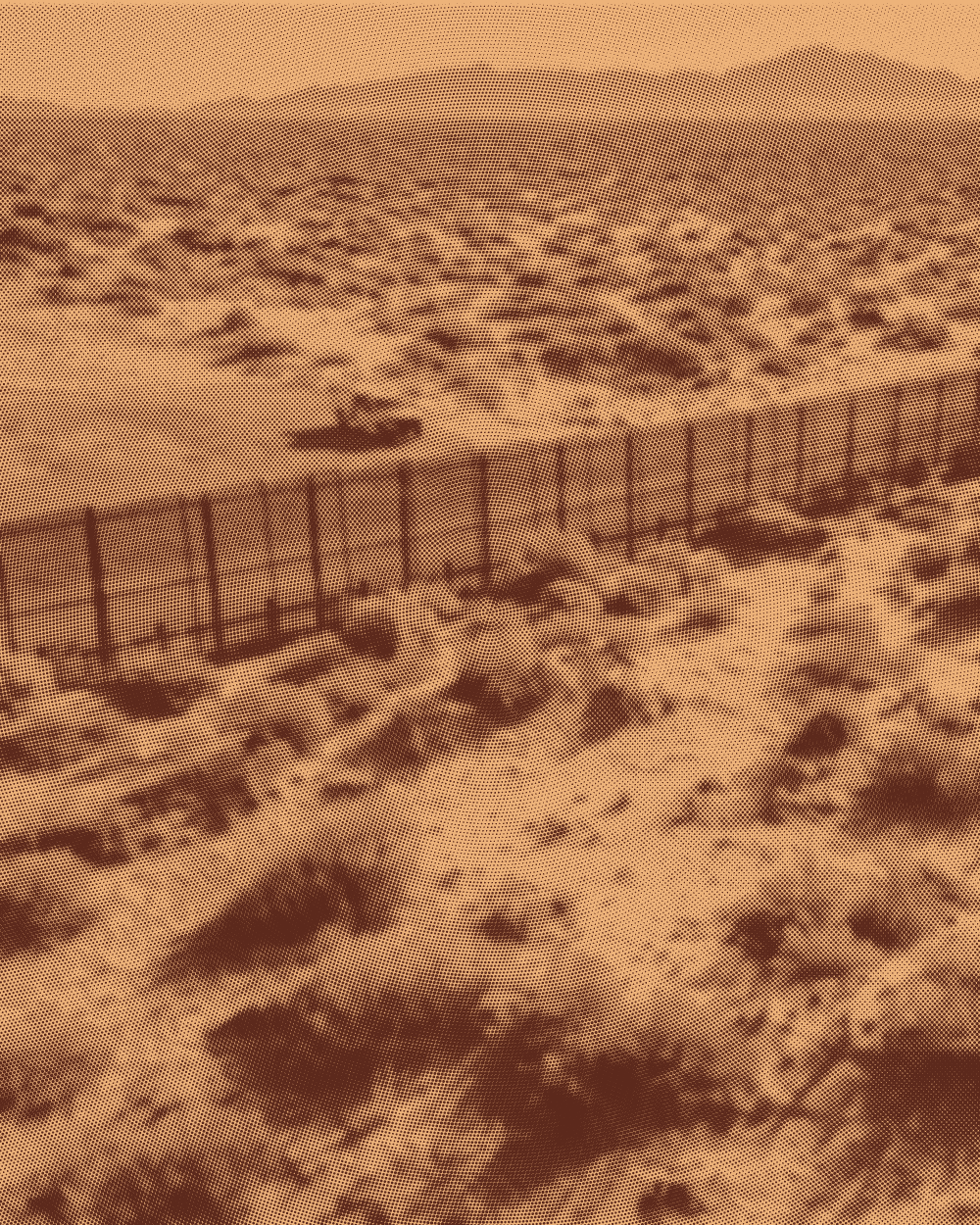
One of the more basic definitions for a border is a line dividing countries. The suggestion here is that borders are primarily separation devices demarcating one side from the other. This clean cut definition falters, however, when considering the rivers running across the imagined line, the seasonal migration of birds and fish, and the territorial sprawl of Indigenous nations that exceed nation-state boundaries.
To speak of borders is to speak of relationships, including to one’s self, each other, more-than-human, land/water/air/subterranean earth (beyond the depth of a plough), countries and cities, and, of course, the border itself.
People traverse borders for all kinds of reasons too innumerable to mention. If pressed to identify one shared reason for such a journey, I would say that it’s the horizon of possibility residing on the other side of the border. Modern-day borders mediate conditions of possibility along the axis of citizenship, race, class, gender, sexuality, and ability. Thus making the pursuit of possibility on the other side of the border more hazardous and life-threatening for some than others.
These are the central questions organizing the third Red Paper report, Borders Hide the Horizon.
INTRODUCING BORDERS HIDE THE HORIZON
The new year is when I lead my team in planning the annual Misko Aki Knowledge Exchange (MAKE). MAKE launched in 2024 as an Indigenous-led hybrid educational program that brought together Indigenous, Black, and racialized community helpers for four weeks to develop skills and knowledge in political engagement through activism and organizing, solidarity and movement-building, and Indigenous-led and decolonial struggle.
It’s no coincidence that MAKE, a program committed to radical relationalities and liveable worlding, launched at a moment when it appears that the world is closing in around geopolitical fault lines, ecological and climate catastrophe, and scarcity logics driven by late-stage capitalism. Many Indigenous approaches to governance and politics are premised on relationality and interdependence.

These commitments to relationality are reflected in a resurgence of Indigenous-transnational organizing and solidarity in support of colonized struggles, including Palestine, Sudan, Congo, and Kashmir. As well as Indigenous people organizing in resistance to US deportation efforts. And, of course, the ongoing solidarities with Black communities in Canada and the US.
These relationships make visible enduring traditions of Indigenous diplomacy and alliance formation – relational practices that also signal the failure of settler colonial and imperial objectives.
I should clarify here that settler colonialism is not the focus of this research. Rather, the task here is to situate settler colonialism within the global socio-political order to establish critical links with international relations and human rights, migration and deportation regimes, and Western imperial attacks on Indigenous sovereignty.
Over the past year, I’ve led a team of researchers, graduate and undergraduate students, activists and organizers, educators and learners, and community helpers through an expansive and in-depth study on Indigenous internationalism to make sense of the tremendous global upheaval redefining international relations. Drawing on diverse research methods such as critical scholarship reviews, individual interviews, focus groups, and community gatherings, Borders Hide the Horizon creates new connections and conversations from familiar issues and topics.
The red paper in three parts
01.
Imperialism and International Relations
02.
Indigenous Internationalism through a Queered Indigenous Feminist Lens
03.
Indigenous-Led Approaches to Remaking the World
Borders Hide the Horizon is ambitious in putting forth perspectives and tools needed to dismantle imperial borderlands and reconfigure international relations, but it does so with the ancestral knowledge that horizons of possibility and liveable worlds are on the other side of these walls.
01.
Imperialism and International Relations
2026 is a year defined by threats and violations to nation-state sovereignty, the decline of rules-based international order and international relations, and expanded migration and deportation regimes.
None of this is surprising when accounting for recent history. This includes Israel's escalation of Palestinian genocide and more recent invasion of Lebanon; the counter-revolution war taking place in Sudan since April 2023; and the intensification of US attacks on Venezuela, Iran, maritime Latin America, Nigeria, Syria, Yemen, and Iraq. In his second term as US president, Trump has also threatened to claim or encroach upon a number of countries including Canada.
When asked if Trump was trolling a bit about making Canada the 51st state, the American president responded, "Actually, no, I'm not."
Sovereignty threats are nothing new to Indigenous peoples resisting Canada's ongoing territorial encroachment, resource extraction, and attacks on Indigenous life. Indigenous people witness and experience this tremendous global upheaval as part and parcel of Western imperialism — a doctrine of conquest and domination spanning the globe and radically restaging the conditions of Indigenous existence.
If surviving five centuries of imperial and colonial rule offers any insight, it's that life finds a way.
This section offers historical context framing imperialism as the basis for modern-day international relations to highlight the connections between Indigenous sovereignty and internationalism with international relations, immigration, and deportation regimes.
The world of walls we know was created over 500 years ago as part of Western imperialism. It was a series of papal bulls that authorized Indigenous conquest and domination and, ultimately, facilitated a new global order.
02.
Indigenous Internationalism through a Queered Indigenous Feminist Lens
This section delves into the rich and diverse perspectives and approaches to Indigenous internationalism to grapple with today’s most urgent and critical issues.
I’ll begin by addressing why ‘Indigenous internationalism’ registers as an oxymoron for many. Postcolonial scholar Radhika Mohanram contends settler usage of the term ‘native’ or ‘indigene’ discursively restrains Indigenous peoples to a particular place (1999, 11). Not to be confused with Indigenous conceptions of place-based belonging, settler formulations of the native establish a counterpoint for the mobile settler, “who alone has the ability and freedom to move and change his landscape” (1999, 14). This binary has far-reaching effects extending well beyond notions of movement and mobility – it shapes perceptions about Indigenous peoples’ interest in the world. Through the settler lens, the indigene is concerned with their immediate environment to the exclusion of all else.
This is a persuasive idea even among those allied to Indigenous peoples. This, in part, is why conversations regarding international law and relations, immigration and deportation, and global events happen around and not with Indigenous peoples.
Indigenous peoples do, in fact, think deeply about the world and this is recorded in oral traditions, historical archives, legal actions, research and scholarship, literature and art, and solidarity movements.
Through a queered Indigenous feminist lens, this section examines Indigenous perspectives on internationalism, governance and politics, law and human rights, and migration and borders.
I’m also invested in the perspectives of Indigenous peoples thinking outside the academy and publishing circuit. Over the next few months, I plan to interview up to ten people who deepen and extend Indigenous internationalism in their daily lives. One question that I plan to ask is along the lines of, how does Indigenous nationhood shape your perspective and approach to internationalism? Another question is: how does your work engage with or build solidarities across different kinds of borders? Through this line of inquiry, I hope to learn more about Indigenous conceptualizations of internationalism, priority areas of concern, and approaches to relationality.
With the interviews scheduled to begin in the Fall, there are dimensions to this research that are yet to be uncovered and, for the present, can only be speculated. I expect to be surprised, and I hope this research is unmade and remade in ways that reflect the prismatic quality of Indigenous internationalism in theory and practice.
03.
Indigenous-Led Approaches to Remaking the World
The report concludes with Indigenous-led approaches to remaking the world through an in-depth engagement with Misko Aki Knowledge Exchange (MAKE) and its community of learners, faculty, and program staff.
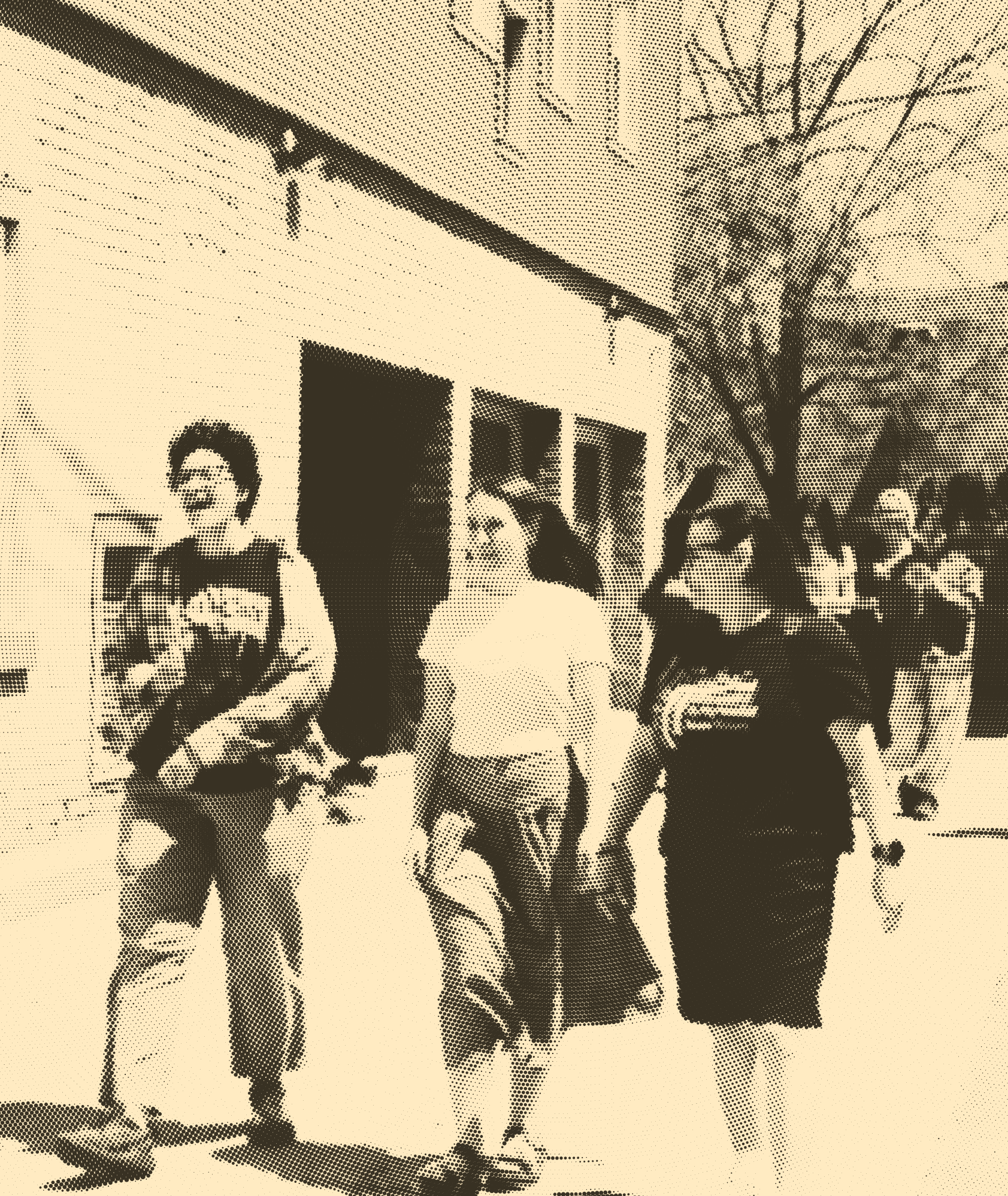
Through MAKE, I’ve come to find that the exercise of reimagining the world is both grounded and speculative. This reflects our shared aspirations to create something new from existing materials.
Sarah A. Nickel (2019) points out in her historical research that Indigenous political engagement was dismissed as activism and, therefore, less political. As she rightly counters, activism is a necessary pathway when formal channels of political engagement are deliberately denied or simply unavailable. Nickel was writing about the mid- to late-twentieth century, but this remains a relevant concern in the contemporary context where Indigenous women, 2SLGBTQQIA+ people, and children are underrepresented or denied representation or leadership in formal political forums.
With political marginalization, solidarity and movement-building within the context of grassroots activism and organizing is not only a creative workaround, it demonstrates an everyday enactment of Indigenous internationalism in worlding projects.
MAKE provides the learning community with theoretical knowledge and practical training to understand themselves as political subjects capable of shaping their communities and futures. This isn’t preparatory work – the program offers the grounds from which radical relationalities are formed and political agendas are created.
In Spring 2026, my research team organized a focus group with alumni and faculty to learn more about their visions and practices for making liveable worlds. We specifically asked for their perspective on how programs like MAKE facilitate reimagining and remaking worlds based in relationality. We offered prompts encouraging participants to reflect on decolonization and solidarity building in their daily lives. We also got more specific about their thoughts on the role of education in movement-building and possibilities for re-worlding and futurity.
Nation-state and border regimes overdetermine the conditions of possibility, but MAKE learners and faculty working from the interstices find ways to access the horizon of possibility.
ON THE HORIZON
This announcement is more than an update of research progress, it is an invitation to the wider Yellowhead community network to participate in shaping the research objectives, perspectives, and approaches. My research team is actively seeking contributions toward the broader research project to accompany this report, set to be published in Summer 2027.
We welcome pitches from scholars, organizers, artists, writers, community researchers, knowledge keepers, photographers, filmmakers, and emerging contributors.
We are especially interested in work that connects historical and contemporary questions linking Indigenous politics and governance to migration, deportation, and border studies; as well as inquiry centring Indigenous perspectives on international relations and human rights, global/third/fourth world solidarity, and mobility. More details can be found in our formal invitation to contribute found here.
Borders Hide the Horizon is ambitious, but holds no aspirations to be the definitive source. Instead, I envision this third installment in the Red Paper series as joining a constellation of critical and creative perspectives, interventions, and conversations. I’m excited to share this report with the wider community and to contribute to critical and dynamic conversations on Indigenous perspectives on international relations and imperial borders.
Together, we will reimagine liveable worlds and move toward the horizon where the conditions of possibility aren’t mediated by colonial borders.